Key Takeaways
-
Use soft washing with eco-friendly detergents for algae and mold growth, as it eliminates the source of contamination and delivers long-lasting results compared to pressure washing alone.
-
Apply chemical pre-treatment before pressure washing to break down stubborn oil stains and rust spots at a molecular level, preventing the stain from being pushed deeper into the concrete.
-
Schedule professional concrete cleaning 1-2 times yearly for driveways and patios, and 2-3 times yearly for pool decks, since Florida's humidity accelerates mold and algae growth faster than cooler climates.
-
Avoid common DIY mistakes like using excessive PSI (which etches concrete), skipping pre-treatment, and neglecting post-cleaning sealing, as these errors can permanently damage surfaces or allow stains to reabsorb quickly.
-
Seal concrete immediately after professional cleaning to fill pores and create a barrier against future staining, which extends cleaning results and prevents long-term surface wear and costly repairs.
-
Hire professionals for high-pressure equipment and trained technique, as commercial-grade machines deliver faster, more consistent results than consumer rentals and reduce the risk of safety injuries and surface damage.
Your driveway and walkways work hard every single day. They handle foot traffic, oil drips, Florida rain, and relentless summer heat. Over time, all of that takes a toll. Concrete develops dark stains, green algae patches, and stubborn discoloration that just won’t scrub away with a garden hose. Sound familiar? You’re definitely not alone. Homeowners across Hillsborough County deal with this exact problem every season. The good news is that the right concrete cleaning solutions can completely transform your home’s exterior. Whether you’re trying to protect your property value, impress HOA inspectors, or simply enjoy a cleaner-looking home, understanding what actually works makes all the difference. In this guide, we’ll break down the best approaches to cleaning concrete surfaces — and help you decide when to roll up your sleeves and when to call in the professionals.
Why Concrete Gets So Dirty So Fast in Florida
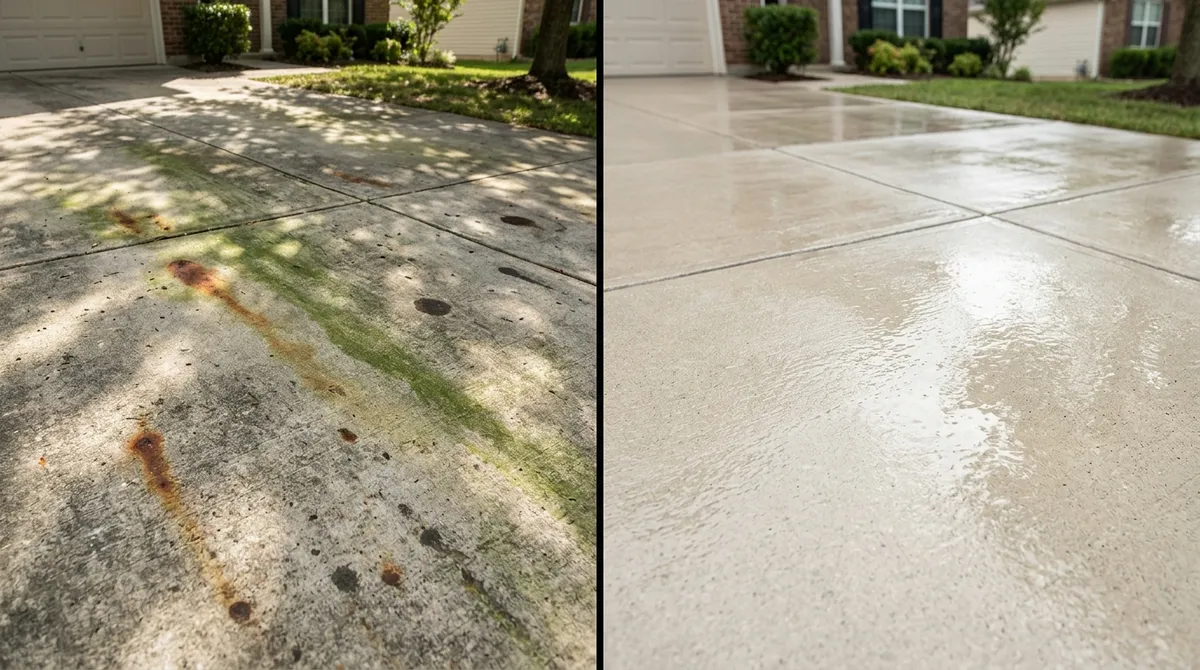
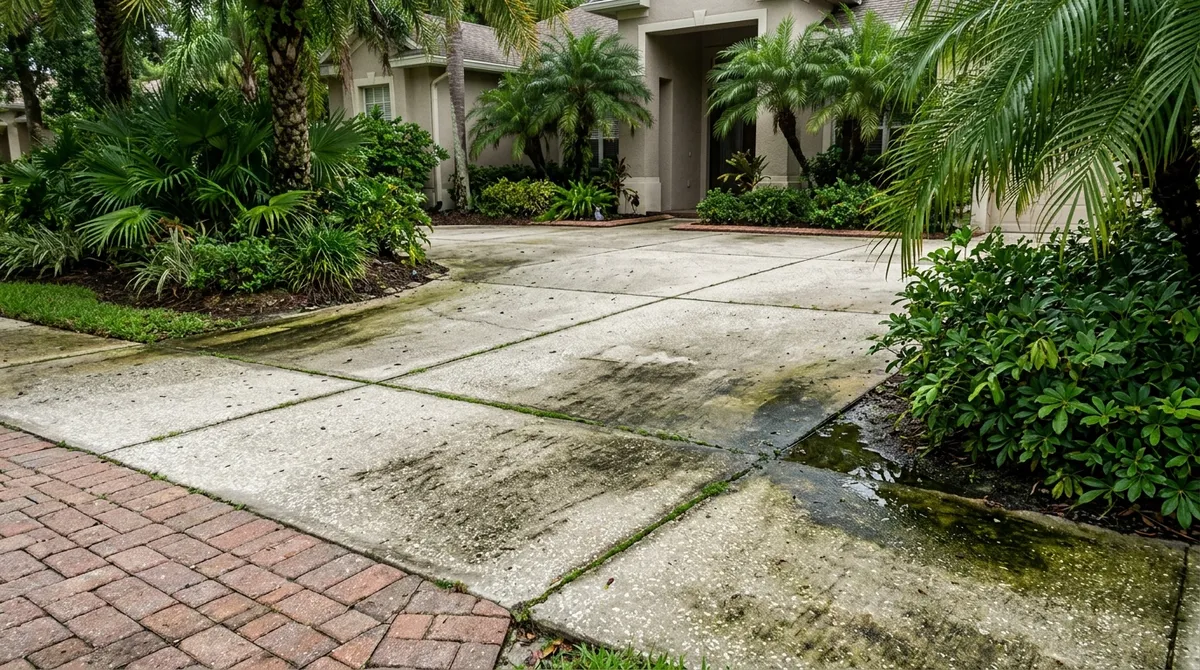
Florida’s warm, humid climate is basically a paradise for mold, mildew, and algae. Concrete is porous by nature, which means it soaks up moisture, oil, and organic matter easily. Once those contaminants settle in, they don’t just sit on the surface — they work their way into the tiny pores of the concrete. That’s why a simple rinse rarely does the job.
Common culprits behind dirty concrete include:
- Green and black algae from Florida’s humidity
- Oil and grease stains from vehicles
- Rust streaks from metal furniture or irrigation systems
- Tire marks from regular parking
- Mildew and mold growth in shaded areas
- Dirt and organic debris tracked in from landscaping
Understanding the source of the stain matters a lot. Different contaminants respond to different concrete cleaning solutions, and using the wrong approach can leave you frustrated — or worse, damage the surface itself. If you’ve ever wondered why power washing concrete makes such a big difference, it comes down to targeting these specific problem areas with the right tools.
The Most Effective Concrete Cleaning Solutions Explained
Not all cleaning methods are created equal. Some work great for light surface grime. Others are built for deep-set stains and biological growth. Here’s a clear breakdown of what works and when to use it.
1. Pressure Washing
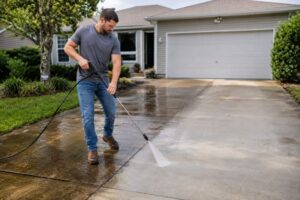
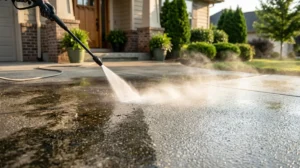
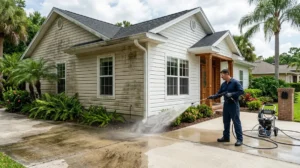
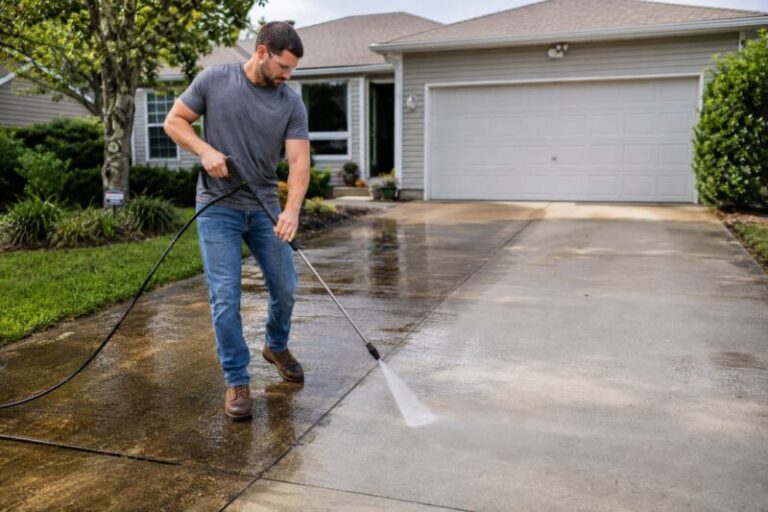
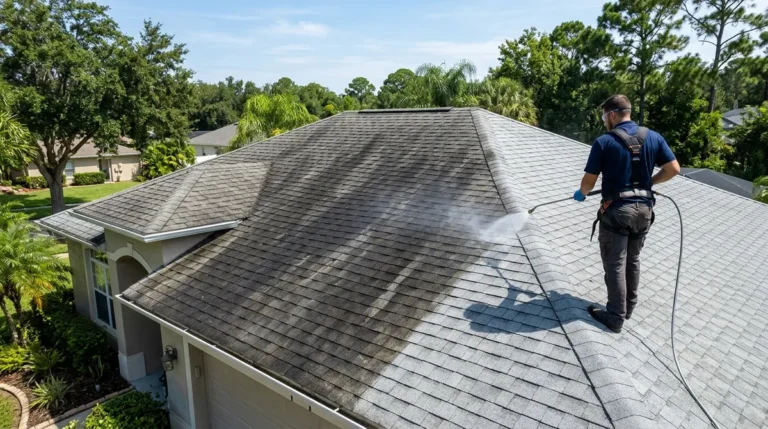
Pressure washing is one of the most effective concrete cleaning solutions available. It uses high-pressure water to blast away grime, algae, and stains from hard surfaces like driveways, sidewalks, and patios. Concrete is durable enough to handle this high-pressure approach, which makes it a great candidate for this method.
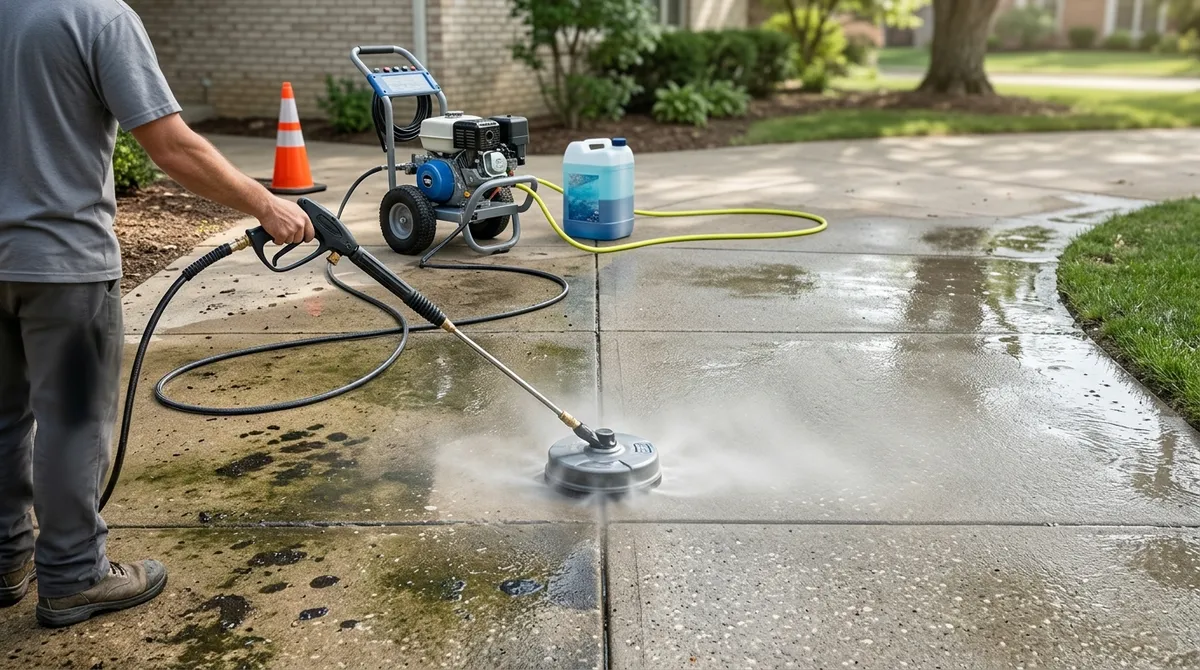
Professional pressure washing equipment generates far more power than any consumer-grade machine from a hardware store. That means deeper cleaning, faster results, and a more even finish. Learn more about how to clean concrete with a pressure washer the right way so you get lasting results without surface damage.
2. Soft Washing with Eco-Friendly Detergents
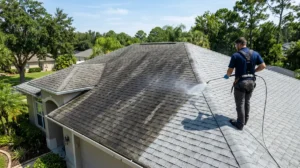
For areas with heavy biological growth — like algae-covered pool decks or shaded walkways — soft washing is an excellent concrete cleaning solution. This method combines low-pressure water with specially formulated detergents that kill algae, mold, and mildew at the root. The result lasts much longer than pressure washing alone because it eliminates the source of the problem. Many eco-conscious homeowners in Hillsborough County prefer this approach because the detergents used are designed to be safe for surrounding plants, pets, and families.
3. Chemical Pre-Treatment
Stubborn oil stains and rust spots often need a little help before the water even comes on. Chemical pre-treatment solutions break down specific stain types at a molecular level. A trained technician will apply the right degreaser or biodegradable cleaner to the stained area, let it dwell for a few minutes, and then rinse it clean. This combination approach is especially effective on driveways with long-term oil buildup.
Comparing Concrete Cleaning Solution Methods
Choosing the right method depends on your specific situation. Here’s a helpful comparison to guide your decision:
| Method | Best For | Effectiveness | Surface Safety |
|---|---|---|---|
| Pressure Washing | General dirt, tire marks, surface grime | High | Safe for concrete, brick, stone |
| Soft Washing | Algae, mold, mildew, biological growth | Very High (long-lasting) | Safe for all surfaces |
| Chemical Pre-Treatment | Oil stains, rust, deep-set discoloration | High (targeted) | Safe when used correctly |
| DIY Garden Hose | Light surface dust | Low | Safe but ineffective |
When in doubt, professional assessment takes the guesswork out of the equation entirely. A trained technician can identify the right concrete cleaning solutions for your specific surfaces and stain types. You can also explore DIY vs. professional concrete cleaning and which saves you more to weigh your options carefully.
Step-by-Step: How Professionals Clean Your Concrete
Wondering what a professional concrete cleaning visit actually looks like? Here’s the typical process from start to finish:
- Inspection: The technician walks the area to identify stain types, surface conditions, and any cracks or sensitive spots.
- Pre-Treatment Application: Appropriate cleaning agents are applied to heavy stains, grease spots, or algae patches.
- Dwell Time: The solution sits for several minutes to break down contaminants effectively.
- High-Pressure Rinse: The technician uses commercial-grade equipment to flush away loosened dirt and cleaning agents thoroughly.
- Detail Work: Edges, corners, and joints receive focused attention to ensure a uniform result.
- Final Inspection: The cleaned area is reviewed to confirm all stains and growth have been removed.
This systematic approach is why professional results consistently outshine DIY attempts. For a closer look at what’s involved, check out what a professional driveway cleaner actually does during a typical service call.
Common Mistakes to Avoid When Cleaning Concrete
Many homeowners accidentally make their concrete situation worse before it gets better. Knowing what NOT to do is just as important as knowing the right concrete cleaning solutions to use.
- Using too much pressure: Excessive PSI can etch or pit concrete surfaces permanently.
- Using the wrong nozzle: A narrow zero-degree tip can carve streaks into soft or older concrete.
- Skipping pre-treatment: Jumping straight to pressure washing without treating oil stains usually pushes the stain deeper in.
- Inconsistent technique: Uneven passes leave stripe marks that look worse than the original staining.
- Neglecting post-cleaning sealing: Unsealed concrete re-soaks stains much faster after cleaning.
These mistakes are surprisingly easy to make — especially if you haven’t cleaned concrete professionally before. For a full breakdown, read about 10 concrete pressure cleaner mistakes that ruin your driveway so you can avoid costly errors.
What Surfaces Benefit from Professional Concrete Cleaning Solutions
Concrete shows up in more places around your home than you might realize. Each surface has slightly different cleaning needs depending on its exposure, use, and age. Here are the most common concrete surfaces that benefit from professional cleaning:
- Driveways: These take the most abuse from vehicles, weather, and oil leaks. Regular cleaning keeps them looking fresh and prevents long-term staining. Explore driveway and concrete cleaning services for professional results.
- Sidewalks and walkways: High foot traffic areas attract dirt and biological growth quickly, especially in shaded spots.
- Patios: Outdoor entertaining areas accumulate food stains, pollen, and algae. Cleaning restores the look and makes them safer underfoot.
- Pool decks: Pool decks get wet constantly, making them prime spots for algae and mildew growth. Slippery surfaces are also a safety hazard.
- Garage floors: Oil and grease stains build up quickly in garage environments.
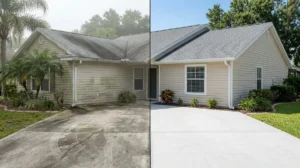
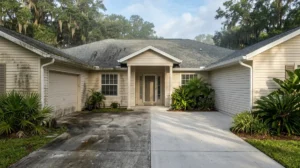
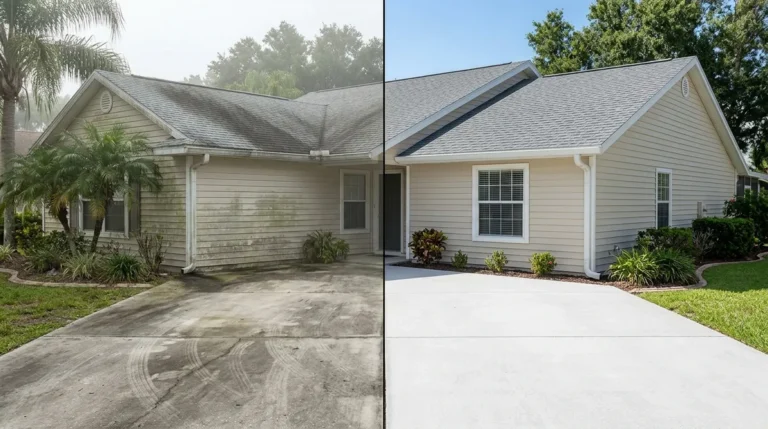
Each of these surfaces deserves targeted attention using the most appropriate concrete cleaning solutions. If you want to see what clean concrete looks like after a professional visit, take a peek at our photo gallery to see real before-and-after results.
How Often Should You Clean Your Concrete Surfaces
This is one of the most common questions homeowners ask, and the answer depends on a few factors.
| Surface | Recommended Cleaning Frequency | Signs It’s Overdue |
|---|---|---|
| Driveway | Once or twice per year | Dark stains, green patches, visible tire marks |
| Sidewalk/Walkway | Once per year | Slippery surface, discoloration, algae growth |
| Patio | Once or twice per year | Dark spots, pollen buildup, embedded dirt |
| Pool Deck | Two to three times per year | Slippery feel, green/black staining, rough texture |
Florida’s climate speeds up biological growth compared to cooler states. Most Hillsborough County homeowners benefit from at least one professional cleaning visit per year — and twice yearly for high-traffic or pool areas. Consistent maintenance with the right concrete cleaning solutions actually saves you money long-term by preventing premature surface wear and costly repairs.
Why Choose Professional Concrete Cleaning Over DIY
We get it — renting a pressure washer and doing it yourself seems like a budget-friendly idea. But there are several important reasons why professional concrete cleaning solutions deliver better results and better value overall.
- Commercial-grade equipment: Professional machines operate at higher pressure and flow rates than consumer rentals.
- Trained technique: Professionals know how to move the wand consistently to avoid streaking or surface damage.
- Right chemicals for the job: Pros match detergents to specific stain types for faster, more effective results.
- Time savings: What takes a homeowner a full Saturday afternoon takes a professional crew a fraction of the time.
- Safety: High-pressure equipment can cause serious injuries in untrained hands. Professionals handle risks safely and confidently.
For time-poor professionals and busy families across Hillsborough County, outsourcing concrete cleaning just makes sense. You can read more about why professional pressure washing beats DIY for a deeper comparison. You can also request your free instant quote online in just a few minutes — no home visit required.
At Buckhorn Power Wash, we specialize in residential concrete cleaning across all of Hillsborough County. From driveways in Valrico to pool decks in Riverview, our team brings the right equipment, the right techniques, and the right concrete cleaning solutions to every job. You can check out reviews from happy customers when you visit us on Google — Buckhorn Power Wash, and see exactly why our neighbors keep coming back. You’re also welcome to browse what past customers have shared on our Yelp page for Buckhorn Power Wash or follow our latest work on our Buckhorn Power Wash Facebook page.
Tips for Keeping Concrete Clean Longer After a Professional Service
Getting your concrete professionally cleaned is a great investment. Here are some simple steps to extend the results as long as possible:
- Seal the concrete: A quality concrete sealer fills pores and creates a barrier against future staining. Ask your cleaning professional about sealing options.
- Clean spills quickly: Oil, paint, and organic material should be rinsed off before they have time to soak in.
- Trim nearby vegetation: Overhanging trees and shrubs drop organic debris that speeds up biological growth on concrete.
- Rinse regularly: A quick rinse with a garden hose between professional cleanings helps slow buildup.
- Schedule annual maintenance: Consistent yearly cleaning prevents heavy buildup and keeps your property looking sharp year-round.
Concrete that’s cleaned regularly and sealed properly simply holds up better over time. It also does wonders for curb appeal — something every homeowner in an HOA community can appreciate. For more helpful tips on maintaining your exterior surfaces, check out curb appeal mistakes that make your home look neglected and make sure your property is always putting its best face forward.
Conclusion: Clean Concrete Starts with the Right Solutions
Dirty concrete doesn’t have to be a permanent problem. With the right concrete cleaning solutions — whether that’s professional pressure washing, eco-friendly soft washing, or targeted chemical pre-treatment — your driveways, patios, and walkways can look brand new again. The key is knowing which method fits your surface, your stains, and your goals. And when you’re ready to skip the guesswork and get it done right the first time, the professionals are here to help. Get your free quote from Buckhorn Power Wash today and see just how easy a clean, beautiful concrete surface can be. Or feel free to give us a call — we’d love to chat about what your property needs.
FAQs
Q: What is the most effective concrete cleaning solution for driveways?
A: For most driveways, a combination of chemical pre-treatment and professional pressure washing delivers the best results. Pre-treatment breaks down oil and organic stains, while high-pressure rinsing blasts them away completely. A professional can match the right solution to your specific stain type for truly impressive results!
Q: Can soft washing be used on concrete surfaces?
A: Absolutely! Soft washing with eco-friendly detergents is a fantastic option for concrete areas with heavy algae or mildew growth. The cleaning agents kill biological matter at the root, which means your concrete stays cleaner for longer — a real win for busy Florida homeowners.
Q: How often should Hillsborough County homeowners clean their concrete?
A: Most homeowners in Hillsborough County benefit from cleaning driveways and patios at least once a year, and pool decks two to three times per year. Florida’s humid climate speeds up algae and mold growth, so staying on a regular schedule keeps your property looking its best and prevents surface damage over time.
Q: Is DIY pressure washing as effective as professional concrete cleaning?
A: DIY pressure washing can handle light surface dirt, but it rarely matches the depth and consistency of professional concrete cleaning solutions. Professionals use commercial-grade equipment, trained technique, and matched detergents that tackle even stubborn stains safely and efficiently — saving you time and frustration!
Q: Does cleaning concrete help with home value and curb appeal?
A: It absolutely does! Clean driveways, walkways, and patios make an immediate positive impression on neighbors, guests, and potential buyers. For homeowners in HOA communities, regular concrete cleaning also helps you stay compliant with appearance standards and avoid unnecessary fines.