Key Takeaways
-
Pre-treat stains with degreaser or algae treatment before pressure washing and allow 5-10 minutes dwell time to break down stains at the surface level, preventing them from being pushed deeper into the concrete.
-
Use 2,500-3,000 PSI with a 25-degree nozzle or rotating surface cleaner for standard concrete driveways to avoid etching the surface, which can create a rough texture that traps more dirt over time.
-
Work in steady, overlapping passes from the garage toward the street in a consistent pattern similar to mowing a lawn, ensuring even coverage and preventing patchy, streaky results.
-
Always perform a final rinse and close-up inspection after pressure washing to remove detergent residue and assess for cracks or deterioration that may need professional repair or sealing.
-
In Florida's humid climate, clean concrete driveways at least once yearly, or every 6 months if shaded or high-traffic, to prevent mold and algae buildup that can break down the concrete surface.
-
Call a professional for deep-set mold, heavy oil stains, large driveways, or older concrete, as DIY pressure washing without proper knowledge and equipment can cause permanent damage costing more to repair.
Your concrete driveway takes a beating every single day. Cars drive over it, rain soaks it, and Florida’s humidity encourages mold and algae to grow fast. If you live in Hillsborough County, you already know how quickly a driveway can go from clean to covered in dark stains and green growth. The good news? cleaning a concrete driveway doesn’t have to be a weekend nightmare. With the right approach, you can have a bright, spotless driveway that boosts your home’s curb appeal and protects the surface for years to come. Whether you’re a busy homeowner, an HOA resident, or someone who simply wants their property looking its best, these five pro tips will help you get real results — without the guesswork.
Why Concrete Driveways Get So Dirty So Fast
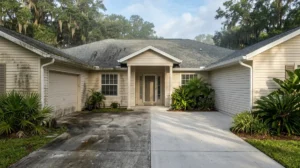
Concrete is porous. That means it absorbs everything — oil, mold spores, algae, dirt, and rainwater. In Florida’s warm and humid climate, this creates the perfect environment for dark stains and biological growth. You might notice green or black streaks spreading across the surface, or oil spots that seem impossible to lift. These aren’t just cosmetic issues. Over time, mold and algae can actually break down the concrete surface, leading to cracks and deterioration. That’s why driveway cleaning matters more than most people think.
The Florida sun also bakes in stains fast. What starts as a small oil drip from a parked car can quickly become a permanent-looking mark. Acting early — and acting smart — makes all the difference. Let’s look at the top five tips pros use when cleaning concrete driveways.
5 Pro Tips for Cleaning Concrete Driveway the Right Way
1. Always Pre-Treat Stains Before Pressure Washing
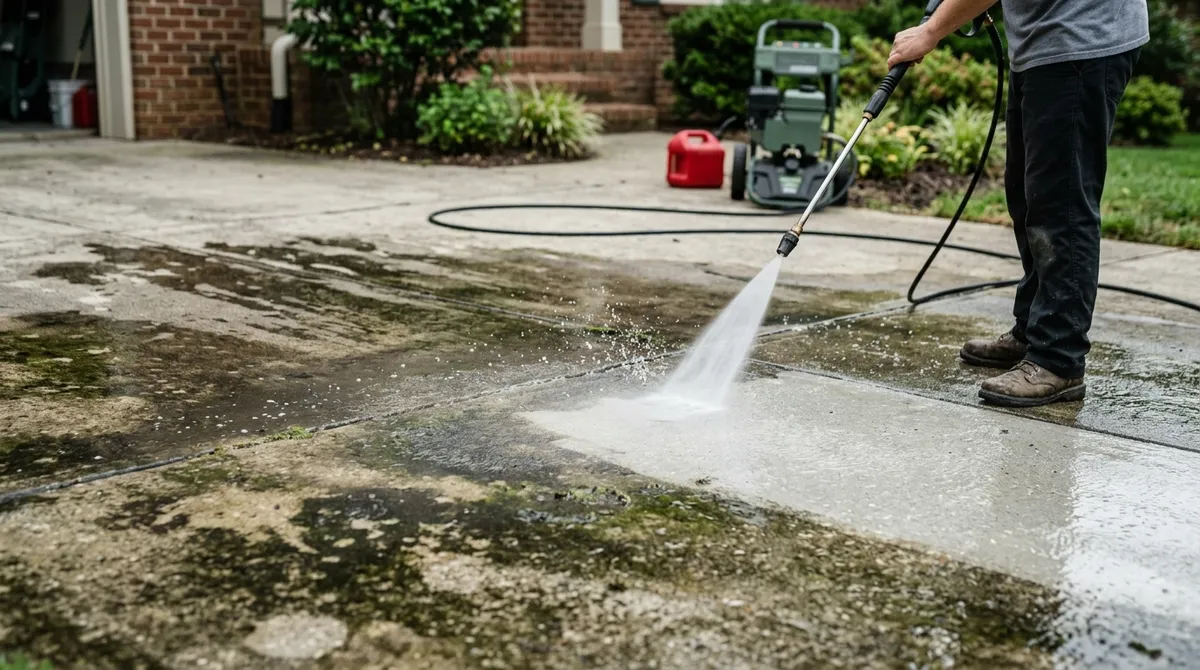
One of the biggest mistakes homeowners make is going straight for the pressure washer without pre-treating stains first. Oil, grease, and biological growth need a cleaning solution to break them down at the surface level. Skipping this step means you end up pushing the stain deeper into the concrete rather than removing it.
Professionals apply a degreaser or eco-friendly detergent directly to stained areas and let it dwell for several minutes. This loosens the bond between the stain and the concrete, making it far easier to rinse away. The result is a much deeper, more even clean across the entire driveway. If you’re curious about what this process actually looks like, here’s what a professional driveway cleaner actually does.
- Apply degreaser to oil and grease stains
- Use an algae or mold treatment for green and black growth
- Allow dwell time of 5–10 minutes before washing
- Work in sections to prevent the solution from drying out
2. Use the Right Pressure Settings for Concrete
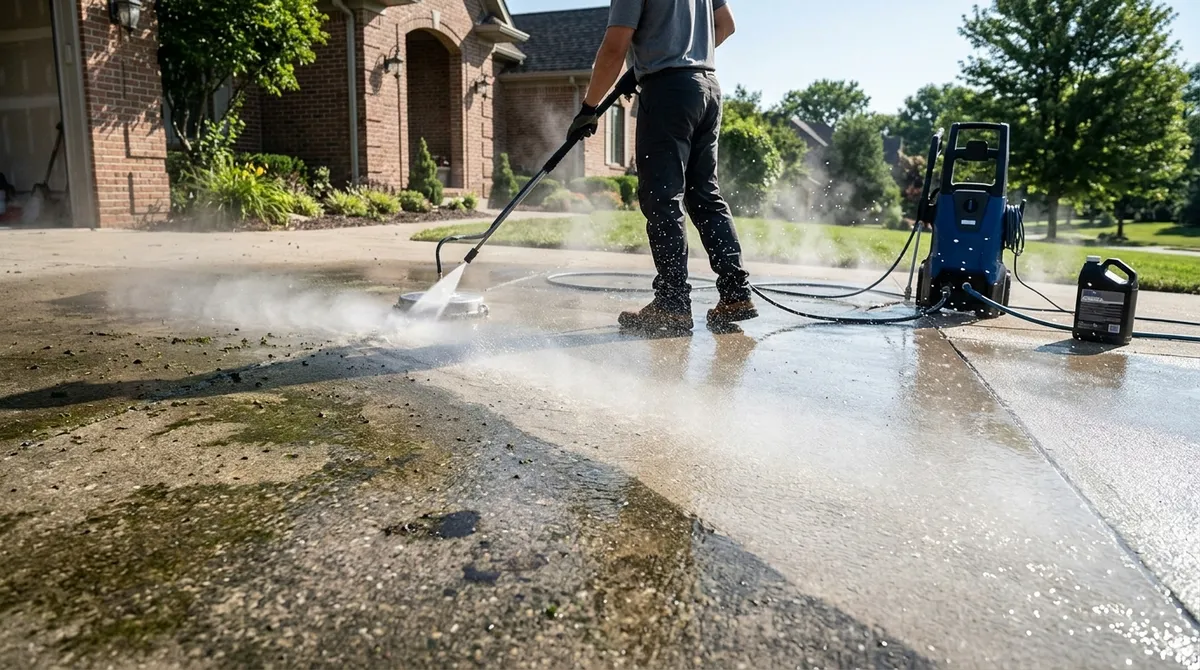
Not all surfaces need the same amount of pressure. Concrete is durable, but using too much pressure at the wrong angle can etch the surface or remove the top layer of the material. This leads to a rough, pitted texture that actually traps more dirt over time — the opposite of what you want.
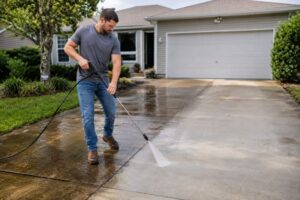
Pros typically use 2,500 to 3,000 PSI for concrete driveways, with a 25-degree nozzle for general cleaning and a rotating surface cleaner for large flat areas. A surface cleaner creates an even, consistent clean without streaking — one of the most common complaints when people try to DIY. Cleaning concrete with a pressure washer the right way makes a huge visual difference.
| Surface Type | Recommended PSI | Best Nozzle |
|---|---|---|
| Standard Concrete Driveway | 2,500 – 3,000 PSI | 25-degree or surface cleaner |
| Stamped or Decorative Concrete | 1,500 – 2,000 PSI | 40-degree (wider spray) |
| Concrete with Heavy Stains | 3,000 PSI + pre-treatment | 15-degree + surface cleaner |
| Older or Cracked Concrete | 1,500 PSI or less | 40-degree (low risk of damage) |
Using the wrong PSI is one of the most common errors in DIY cleaning. For more on this topic, check out 10 concrete pressure cleaner mistakes that ruin your driveway. Avoiding these errors saves time, money, and a lot of frustration.
3. Work in a Consistent Pattern to Avoid Streaks
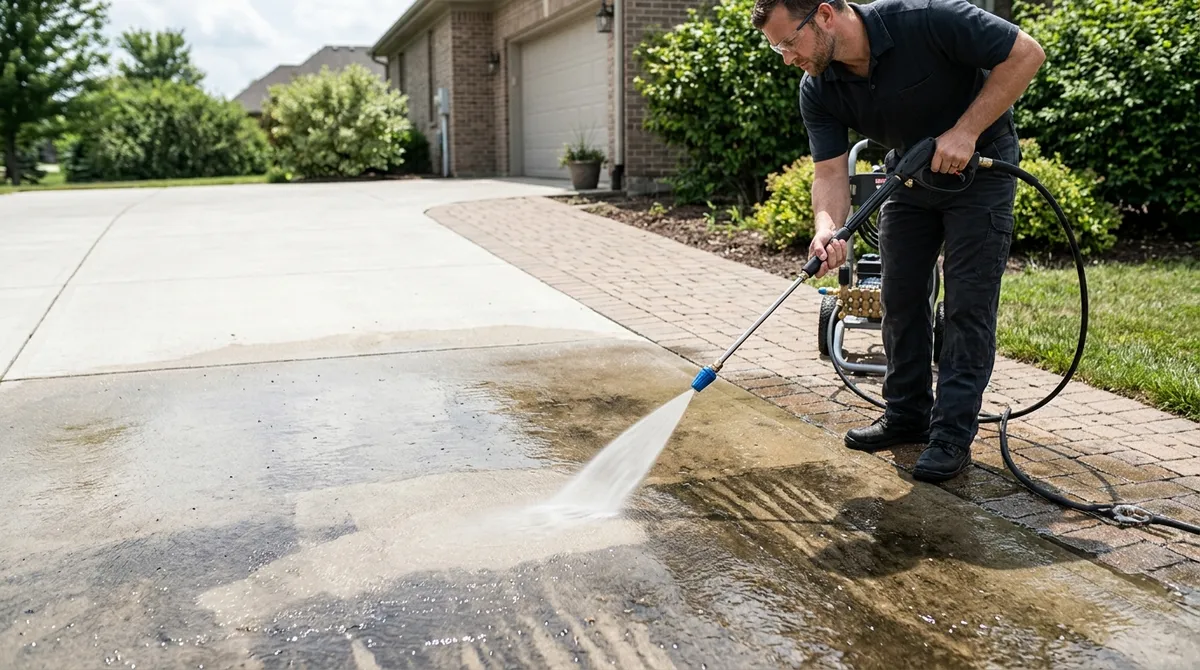
Here’s a tip that separates the pros from the amateurs: always work in a steady, overlapping pattern. Many homeowners spray randomly across the driveway and end up with a patchy result — some spots clean, others still gray and stained. This is especially noticeable once the surface dries.
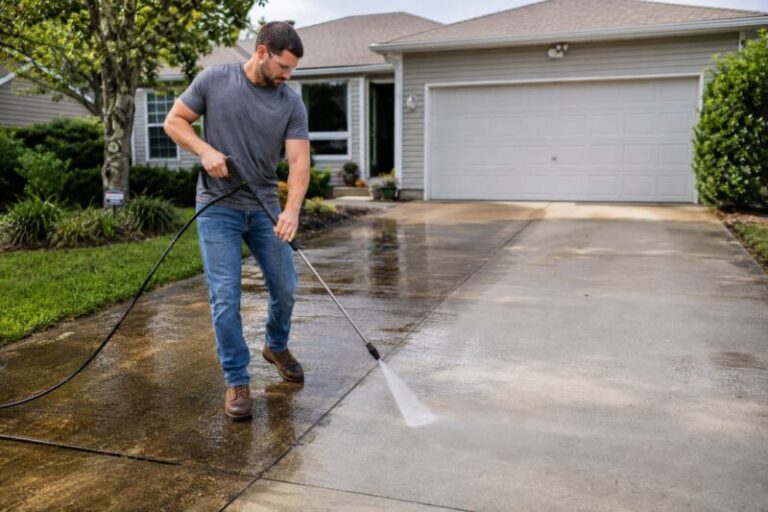
A professional technique involves working from one end of the driveway to the other in straight, overlapping passes — similar to mowing a lawn. This ensures every inch gets equal cleaning coverage. Starting from the garage end and working toward the street also means dirty water flows away from your home rather than back toward it.
- Start at the highest point of the driveway (usually near the garage)
- Make straight passes from left to right, overlapping each pass by 2–3 inches
- Keep the nozzle at a consistent distance from the surface — about 6 to 10 inches
- Move at a steady pace — too fast leaves dirt behind, too slow can etch the concrete
- Rinse the entire surface once complete to remove loosened debris
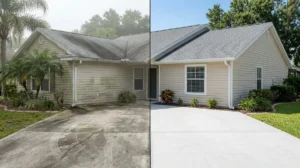
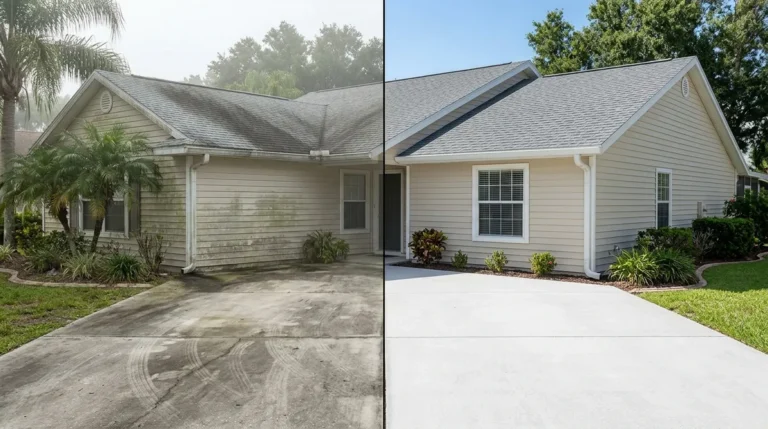
This method also works beautifully when paired with a surface cleaner attachment. You can see real before-and-after results in the Buckhorn Power Wash gallery — it’s pretty satisfying stuff!
4. Don’t Skip the Post-Clean Rinse and Inspection
After the main wash, many people pack up and call it done. But professionals always do a final rinse and a close-up inspection. This step matters because it removes any remaining detergent residue, loose debris, and dirty water that may have settled back on the surface. Skipping it can leave a dull film on the concrete once it dries.
During the inspection, pros also look for cracks, chips, or areas where the concrete might be starting to break down. Catching these early means you can address them before they become costly repairs. It’s also a good time to assess whether the driveway could benefit from sealing — a step that protects the surface from future staining and extends the life of the clean.
- Rinse the entire surface with clean water after washing
- Check for detergent residue — it can cause a hazy look when dry
- Inspect for cracks, pitting, or areas of concern
- Allow the concrete to dry fully before parking on it
- Consider sealing after cleaning for long-term protection
Want to understand the full process even better? Here’s how cleaning a driveway with a pressure washer really works — from start to finish.
5. Know When to Call a Professional
Some driveway cleaning jobs are genuinely DIY-friendly. But others — like deep-set mold, heavy oil staining, large driveways, or older concrete that needs a gentle touch — are best handled by an expert. Attempting to power wash a problem surface without the right knowledge or equipment can cause permanent damage, which costs far more to fix than a professional clean would have.
Hiring a professional also saves you a full weekend of work. Think about it: renting or buying equipment, sourcing the right detergents, learning the technique, and spending hours in Florida heat — versus having a trained team handle everything in a fraction of the time. For Hillsborough County homeowners, professional driveway cleaning beats DIY every time when it comes to results, safety, and convenience.
Buckhorn Power Wash serves homeowners across Hillsborough County with expert driveway and concrete cleaning that removes mold, algae, tire marks, and tough stains. You can visit Buckhorn Power Wash on Google to read reviews from real customers in your area.
| Situation | DIY Friendly? | Pro Recommended? |
|---|---|---|
| Light surface dirt and dust | Yes | Optional |
| Mold and algae growth | Risky | Yes |
| Deep oil or grease stains | Difficult | Yes |
| Large or long driveway | Time-consuming | Yes |
| Cracked or older concrete | Not recommended | Strongly recommended |
| HOA compliance deadline | Possible but risky | Yes |
How Often Should You Clean Your Concrete Driveway?
In Florida’s climate, at least once a year is the minimum recommendation for most homeowners. However, driveways that see heavy traffic, have overhanging trees, or are in shaded areas (which stay moist and encourage growth) may benefit from cleaning every six months. HOA communities often require a cleaner exterior appearance year-round, making regular scheduling even more important.
A good rule of thumb: if you can see visible green or black staining, your driveway is ready for a clean. Don’t wait until it becomes a thick layer of buildup — the longer you leave it, the harder it is to remove. Driveway cleaning service is worth every penny when you consider what neglect can do to the concrete over time.
- Most Florida driveways: clean at least once per year
- Shaded or high-traffic driveways: every 6 months
- HOA-governed homes: as often as required to stay compliant
- After a storm or heavy rain season: inspect and clean as needed
The Benefits of a Clean Concrete Driveway
There’s more to a clean driveway than good looks. A well-maintained concrete surface actually lasts longer, stays safer underfoot (wet algae is seriously slippery!), and adds real value to your home. Studies consistently show that curb appeal has a measurable impact on property values — and a stained, green driveway is one of the first things potential buyers or neighbors notice. You can check out our full range of exterior cleaning services to see how a complete property clean can make your home shine.
For eco-conscious homeowners, modern professional pressure washing uses far less water than a garden hose approach. Pros target the cleaning precisely, reducing waste and runoff. You can also feel confident that biodegradable detergents are safe for your landscaping and family. Check out what Buckhorn Power Wash customers on Yelp have to say about their experience — the results speak for themselves.
If you want to go deeper on the topic of concrete cleaning, the EPA’s WaterSense program offers great resources on water-efficient cleaning practices that are good for your wallet and the environment.
Ready to Get Your Driveway Looking Its Best?
Cleaning your concrete driveway the right way doesn’t have to be stressful or complicated. With the right pre-treatment, proper pressure settings, a consistent technique, a thorough rinse, and the wisdom to call a pro when needed, you can have a driveway that looks like new — and stays that way longer. Whether you’re prepping for a home sale, meeting HOA standards, or simply taking pride in your property, a clean driveway makes a huge difference.
If you’re ready to skip the hard work and get professional results without lifting a finger, the team at Buckhorn Power Wash is here to help. We proudly serve homeowners throughout Hillsborough County — from Brandon and Valrico to Riverview and beyond. You can also follow us on Facebook for cleaning tips and updates from our team.
Don’t wait for that green stain to become a permanent fixture. Request your free instant quote today and see just how easy it is to get your concrete driveway looking clean, bright, and beautiful again.
FAQs
Q: How often should I have my concrete driveway professionally cleaned in Florida?
A: Great question! In Florida’s humid climate, most homeowners benefit from professional driveway cleaning at least once a year. If your driveway is shaded or sees heavy traffic, every six months is even better to keep mold and algae from building up.
Q: Can pressure washing damage my concrete driveway?
A: It can if done incorrectly — that’s the honest truth! Using too much pressure or the wrong nozzle on older or stamped concrete can etch the surface. That’s why professionals adjust their settings based on your specific concrete type to get a deep clean without any damage.
Q: What causes black and green stains on a concrete driveway?
A: Those dark streaks are usually mold, mildew, or algae — all very common in Florida’s warm, wet environment. They thrive in the microscopic pores of concrete and spread quickly if left untreated. A professional pressure wash with the right detergent removes them completely and safely.
Q: Is it worth sealing my concrete driveway after cleaning it?
A: Absolutely! Sealing after a professional clean creates a protective barrier that slows down future staining and biological growth. It also makes future cleaning easier and helps your driveway stay looking fresh for longer — a smart investment for any homeowner.
Q: How long does a professional concrete driveway cleaning take?
A: Most residential driveways in Hillsborough County take anywhere from 30 minutes to a couple of hours, depending on size and the level of staining. The team arrives with everything needed and handles the whole job efficiently so you can get on with your day!